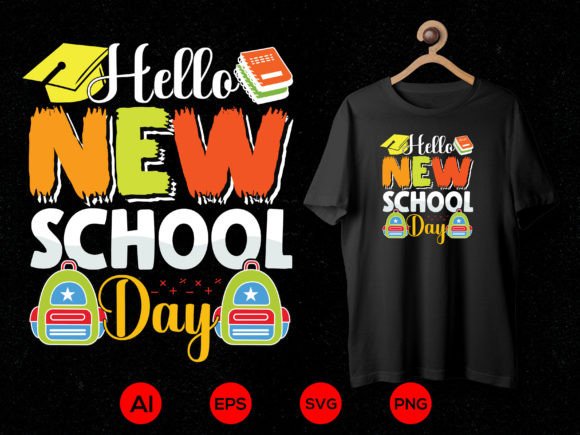
Back to School T-shirt Design 53: A Scalable Creative Asset for Modern Educators, Makers, and Brands
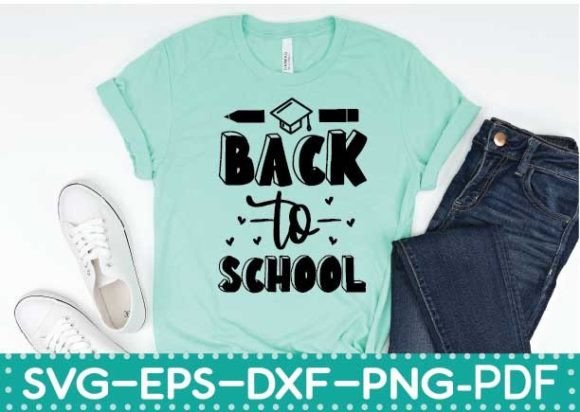
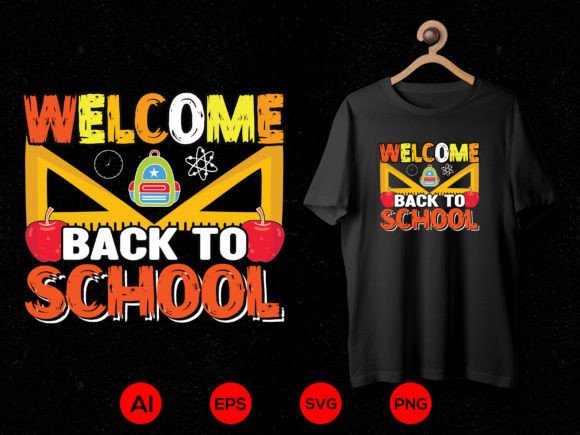
Back to School T-shirt Design 53 — titled Hello new school day You — is more than a seasonal graphic. It’s a purpose-built, production-ready digital asset engineered for versatility, speed, and professional-grade output. Designed with creators and commercial users in mind, this vector-based resource delivers immediate utility across print, digital, and physical product workflows — from classroom apparel to branded merchandise, personalized learning tools, and small-batch entrepreneurial ventures.
A Design Engineered for Real-World Production Needs
At its core, Back to School T-shirt Design 53 is a meticulously crafted vector suite delivered in AI (Adobe Illustrator), EPS, PNG, and SVG formats. Each file is print-ready out of the box — meaning no rasterization, no pixelation, and no guesswork when scaling across applications. The design features clean, balanced typography paired with subtle, inclusive visual cues that evoke energy, readiness, and individuality — all without leaning into clichés like apples, chalkboards, or backpacks.
What sets it apart isn’t just aesthetics — it’s functional intelligence. Every element is built as a 100% vector shape, allowing infinite resizing without loss of fidelity. Color is fully editable at the layer level, enabling rapid customization for school colors, brand palettes, or accessibility needs (e.g., high-contrast variants for neurodiverse learners). This isn’t a static image; it’s a modular component in a creator’s toolkit.
Why This Design Resonates Now: Aligning With Evolving Creative Workflows
The rise of Back to School T-shirt Design 53 reflects broader shifts in how professionals approach content creation. Today’s educators, freelance designers, print-on-demand entrepreneurs, and marketing teams operate under tighter timelines, leaner budgets, and higher expectations for personalization. Stock assets are no longer enough — users demand files that integrate seamlessly into existing pipelines: Cricut and Silhouette cut machines, sublimation workflows, direct-to-garment printers, and even AI-augmented design platforms.
Consider a real-world example: A K–12 art teacher launching a student-led “Welcome Week” initiative can import the SVG file directly into Canva or Cricut Design Space, swap colors to match school branding in under two minutes, and cut iron-on transfers for 30 custom t-shirts before lunch. Meanwhile, a boutique apparel brand running a limited-edition back-to-school drop uses the AI file to generate mockups across 12 shirt styles and colors — all while preserving consistent line weight and spacing across sizes.
This responsiveness mirrors industry-wide adoption of design-as-infrastructure: where creative assets function less like finished products and more like interoperable components — plug-and-play elements that accelerate time-to-market without sacrificing quality.
Beyond Apparel: Expanding Use Cases Across Industries
While the name references t-shirts, the utility of Back to School T-shirt Design 53 extends far beyond apparel. Its vector-native structure and resolution-independent scalability make it equally effective for:
- Classroom resources: Printable welcome posters, editable name tags, and laminated desk plates — all adapted from the same source file;
- Engraving and signage: Clean vector paths translate precisely to laser engravers for wooden awards, acrylic desk organizers, or custom library stamps;
- Digital engagement: SVG integration into LMS dashboards, email newsletters, or virtual orientation kits — supporting consistent visual identity across analog and digital touchpoints;
- Small-business merchandising: Local bookstores, tutoring centers, or after-school programs use the design to produce cohesive swag (stickers, tote bags, canvas totes) without hiring a designer for each item.
Each application leverages the same foundational strengths: color flexibility, typographic clarity, and technical readiness. That consistency reduces cognitive load for users — whether they’re managing five product SKUs or preparing for their first parent-teacher conference.
Meeting Changing Expectations in Education and Branding
Educational institutions and edtech brands are increasingly prioritizing human-centered communication. Gone are the days when “back to school” meant generic motivational slogans. Today’s stakeholders — students, families, teachers — respond to messaging that acknowledges transition, agency, and emotional readiness. The phrase Hello new school day You deliberately places the individual at the center — not as a passive participant, but as an active contributor to the learning experience. It’s warm, affirming, and quietly empowering — a tone aligned with research on belonging and growth mindset in academic settings.
From a branding perspective, this design supports authenticity over ornamentation. In an era where consumers — especially Gen Z and younger millennials — favor transparency and intentionality, minimal yet meaningful visuals perform better. There’s no extraneous clip art, no forced nostalgia. Instead, there’s clarity of message and precision of execution — qualities that resonate across school districts, independent learning communities, and mission-driven startups alike.
Technology Enablers: How File Formats Shape Practical Outcomes
The inclusion of AI, EPS, PNG, and SVG isn’t a feature checklist — it’s a strategic response to platform diversity. Adobe Illustrator (.AI) remains the gold standard for professional editing and handoff to print vendors. EPS ensures backward compatibility with legacy RIP (raster image processing) systems still used by many screen printers. PNG provides transparent-background raster output ideal for web mockups and social media previews. And SVG — lightweight, scalable, and natively supported by modern browsers — enables dynamic implementation in educational apps, interactive PDFs, and responsive websites.
For freelancers juggling multiple clients, having one source design that works across these environments eliminates redundant conversion steps and version-control headaches. For agencies building reusable brand toolkits, it means delivering future-proof assets — not just final images.
Future-Ready Without Being Futuristic
Back to School T-shirt Design 53 doesn’t chase trends — it anticipates needs. As AI-assisted design tools mature, vector assets with clean layer structures and logical grouping become increasingly valuable. Tools like Adobe Firefly and Canva’s Magic Studio rely on well-organized vectors to enable intelligent recoloring, style transfer, and layout adaptation. This design was built with those capabilities in mind: named layers, grouped elements, and non-destructive effects — ensuring compatibility not only with today’s software but also with tomorrow’s intelligent workflows.
Similarly, sustainability considerations inform its value proposition. By reducing the need for repeated design commissions, stock photo licensing, or manual resizing errors, it lowers the carbon and labor cost per output unit. One file serves dozens of purposes — minimizing redundancy without compromising specificity.
Who Benefits — and Why It Matters
Professionals using Back to School T-shirt Design 53 aren’t just saving time — they’re reclaiming creative bandwidth. Educators gain hours previously spent sourcing, editing, or troubleshooting low-res graphics. Freelancers deliver polished, on-brand results faster — strengthening client trust and repeat business. Entrepreneurs reduce time-to-launch for seasonal collections, letting them test markets with agility. Marketers maintain visual cohesion across channels without maintaining separate design libraries.
Most importantly, it reflects a quiet but significant shift in creative economics: the growing recognition that high-quality, ethically sourced, technically sound digital assets are infrastructure — not decoration. They form the invisible scaffolding that supports clarity, inclusion, and efficiency in how we communicate, teach, and build community.
Back to School T-shirt Design 53 doesn’t promise transformation. It delivers reliability — precise, adaptable, and rooted in real practice. And in a world where attention is scarce and expectations are rising, that kind of thoughtful utility is exactly what forward-looking creators, educators, and brands are choosing to invest in.