Paint Brush Clipart, Back to School: Simple, Versatile, and Ready When You Are
If you’ve ever spent 20 minutes trying to crop a clipart image—only to end up with jagged edges, a stubborn white border, or blurry text layered on top—you know how much time (and calm) a truly ready-to-use asset can save. That’s exactly what Paint Brush Clipart, Back to School delivers: clean, high-resolution PNGs designed for real work—not just decoration.
What You’re Actually Getting (and Why It Matters)
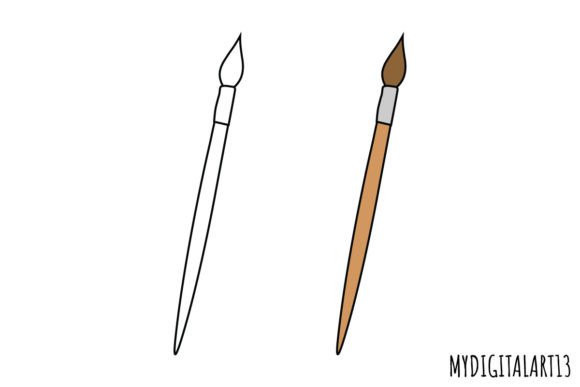
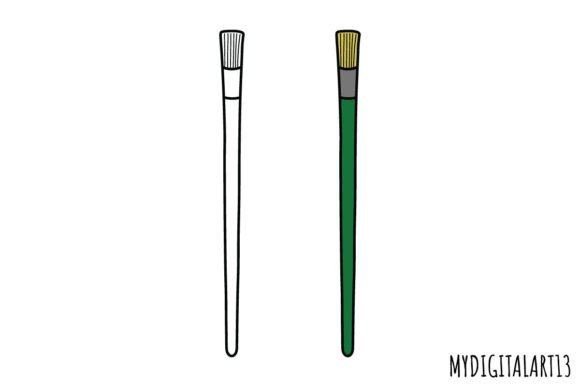
This isn’t just another set of generic brush icons. Each Paint Brush Clipart, Back to School download includes two purpose-built files: one vibrant color version and one crisp black-and-white version—both in 300 DPI resolution and both saved as PNGs with fully transparent backgrounds. No white boxes. No awkward padding. No extra steps to erase or mask.
That transparency isn’t just convenient—it changes how you work. Drop the brush onto a watercolor-textured background for a handmade invitation. Layer it over a student photo for a “First Day of Art Class” printable. Overlay it on a pastel gradient for a summer camp newsletter header—and it blends seamlessly, every time. Because the edges are clean and the resolution is print-ready, you won’t need to second-guess whether it’ll hold up on a 5×7 postcard, a classroom banner, or a digital slide deck.
Where This Clipart Fits Into Real Life (Not Just Design Theory)
Think about the last time you needed something visual—fast—but didn’t want to hire a designer or wrestle with AI tools that generate inconsistent results. Maybe you’re:
- A third-grade teacher prepping welcome packets for the new school year—and needing cheerful, age-appropriate graphics that don’t look like stock photos from 2004;
- A small business owner launching a back-to-school craft kit line, and needing consistent branding across labels, social posts, and Etsy listings;
- A homeschool parent designing custom learning trackers—and wanting to add visual cues (like a paintbrush next to “Art Time”) without spending hours in Canva;
- A stationery maker creating limited-edition planner stickers—and needing scalable, crisp icons that won’t pixelate when resized to ¼ inch;
- An educator building a digital resource library for colleagues—and needing accessible, high-contrast B&W versions for students who benefit from simplified visuals.
In each case, Paint Brush Clipart, Back to School works because it’s built for flexibility—not just aesthetics. The color version adds warmth and energy; the B&W version ensures readability in photocopies, handouts, or low-ink printing. Both scale cleanly from web banners down to tiny die-cut sticker dimensions.
How It Fits Into Your Workflow—Without Disrupting It
You don’t need design experience to use these well. If you regularly use Google Docs, Canva, Microsoft Word, Adobe Express, or even basic scrapbooking software like Silhouette Studio, you’ll drop these in and move on. No tutorials required. No layers to unlock. No licensing fine print to decode (they’re for personal *and* commercial use—no attribution needed).
But here’s what many users overlook before downloading: context matters more than resolution. A 300 DPI file looks stunning on a printed poster—but if your audience mostly sees it on mobile screens, you might not need all that density. Still, having it available means you’re covered whether you’re updating a website hero image today or printing 100 welcome folders next month. That foresight saves time later—no re-downloading, no upscaling, no quality loss.
Real Use Cases—Beyond the Obvious
Yes, it works on invitations and classroom posters. But its usefulness stretches further:
- Summer camp staff training handbooks: Use the B&W brush icon beside activity instructions (“Paint & Create Station”) so volunteers scan quickly—even in low-light cabin settings.
- Small-batch product packaging: Print the color version on kraft paper gift tags for art supply bundles—its transparency lets the natural texture show through, giving a tactile, artisanal feel.
- Digital course modules: Insert the brush next to “Creative Prompt” headers in a teacher PD course—helping visual learners orient themselves without distracting from content.
- Student-led projects: Let middle schoolers drag the clipart into their own Google Slides presentations for art history reports—no copyright worries, no pixelation when presenting on classroom projectors.
- Blog graphics: Pair it with a handwritten font and soft shadow in a Pinterest pin titled “Back-to-School Art Supplies You’ll Actually Use”—it draws attention without competing with your message.
What to Keep in Mind Before You Use It
Even great assets have limits—and knowing them helps you use Paint Brush Clipart, Back to School more effectively:
- Color consistency matters. If you’re using the color version across multiple platforms (e.g., Instagram, email newsletters, printed flyers), test how it renders in different color profiles. Some screens mute saturated tones—so if your brand relies on a specific blue or coral, preview it on several devices first.
- B&W doesn’t always mean “high contrast.” The black-and-white version is clean and legible, but it’s not optimized for accessibility like a WCAG-compliant icon would be. If you’re designing for users with low vision, pair it with clear typography and sufficient spacing—not just rely on the icon alone.
- Transparency ≠ automatic harmony. Just because the background is gone doesn’t mean the brush will “fit” any layout. Try it over a few background colors or textures before finalizing—sometimes a subtle drop shadow or light stroke makes all the difference in readability.
Why This Small Detail Makes a Real Difference
We don’t often talk about clipart as infrastructure—but it is. It’s the quiet layer beneath dozens of everyday outputs: the welcome sign taped to a classroom door, the PDF checklist emailed to parents, the sticker sealing a summer journal kit, the thumbnail image on a blog post about creative learning.
When those elements are thoughtfully made—high-res, transparent, versatile, and usable across contexts—they reduce friction. They let teachers focus on teaching instead of troubleshooting image exports. They help small makers ship consistent, professional-looking products without a design team. They give busy parents one less thing to overthink when prepping for the new school year.
That’s the quiet value of Paint Brush Clipart, Back to School: not flash, not novelty—but reliability, clarity, and ease, exactly when you need it.