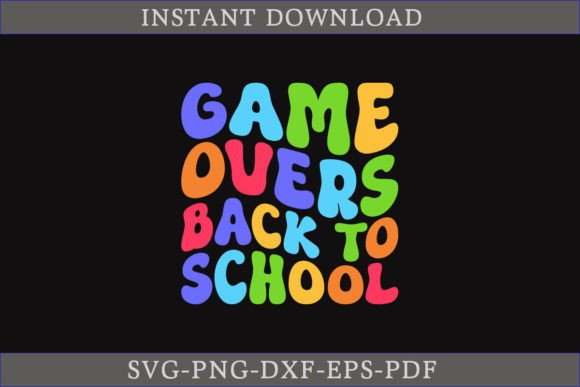
Game Overs Back to School SVG Cut File
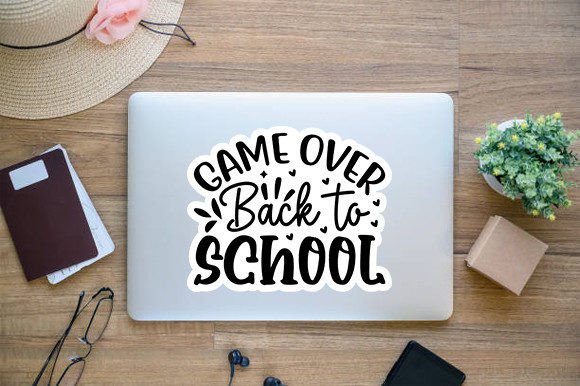
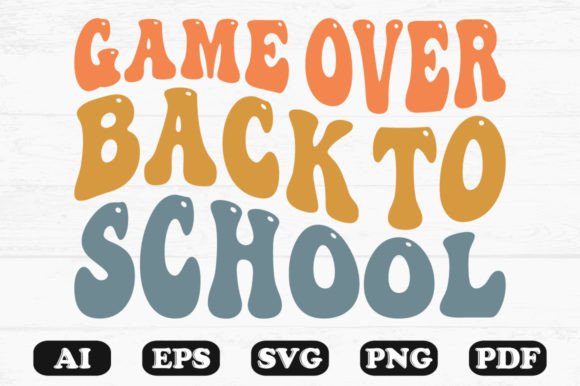
Back-to-school season isn’t just for students—it’s a creative reset for makers, educators, small business owners, and designers who turn everyday moments into meaningful expression. The Game Overs Back to School SVG Cut File meets that moment with clarity, versatility, and quiet confidence. It’s not another generic “first day of school” graphic. It’s a bold, playful, slightly nostalgic nod to retro gaming culture—reimagined for real-world use across apparel, signage, classroom decor, and digital assets.
This isn’t clipart. It’s precision-engineered vector design: clean lines, intentional spacing, and intelligent layering built for adaptability—not decoration alone. You get one zip file containing SVG, DXF, EPS, PNG, and PDF formats—each optimized for its purpose. Whether you’re cutting vinyl on a Cricut Maker, prepping a print-ready poster in Adobe Illustrator, or exporting a transparent PNG for social media banners, the file set works without workarounds.
Why This Design Fits Real Creative Workflows
What makes the Game Overs Back to School SVG Cut File stand out isn’t novelty—it’s fidelity to function. Every shape is 100% vector-based, meaning it scales from a 1-inch sticker to a 36-inch wall decal without pixelation or distortion. Colors are separated logically—not locked into swatches—so swapping a neon green for muted sage takes seconds in any vector editor. No raster tricks. No hidden layers. Just editable paths, grouped intuitively and labeled clearly.
It’s also built with machine-cutting in mind. Paths are closed, overlapping elements are cleaned, and stroke widths are consistent—no surprises when your Silhouette Cameo reads the file. If you’ve ever wrestled with an SVG that won’t weld properly or exports with stray nodes, you’ll appreciate how this design respects your time and tools.
Creative Applications That Go Beyond T-Shirts
T-shirts? Yes—they look sharp on heather grey crewnecks or oversized tees. But the real value unfolds when you step sideways:
- Classroom identity: Teachers use it on laminated name tags, bulletin board headers, or student reward stickers—pairing “Game Overs” with subject-specific icons (e.g., a math symbol + “Level Up!”) to reinforce growth mindset in a language kids recognize.
- Small business merch: A tutoring center prints it on tote bags and water bottles; a local bookstore uses the SVG to create window decals that say “Game Over, Summer Break”—inviting families in with wit instead of cliché.
- Digital integration: Convert the SVG to web-friendly format and animate the “GAME OVER” text with subtle hover effects on a back-to-school landing page. Use the PNG version as a watermark overlay on Instagram Stories announcing fall workshops.
- Event branding: At a school supply drive or parent orientation night, scale the design across banners, table tents, and handouts—keeping visual consistency without repeating the same image three times.
Adapting for Different Audiences—and Staying Authentic
A high school art teacher might simplify the layout, removing extra glyphs to focus on bold letterforms for a linocut project. A freelance designer building a brand kit for an edtech startup could extract the “O” from “OVER” and rework it as a custom icon—round, friendly, and tech-adjacent. An Etsy seller targeting nostalgic millennials might pair the SVG with 8-bit fonts and palette swaps (think CRT monitor blue + burnt orange) for limited-run mugs.
The key is intentionality—not just changing colors, but aligning choices with audience expectations. For younger students, high contrast and simplified shapes increase legibility. For educators, subtle nods to pedagogy (like embedding a tiny graduation cap in the “G”) add quiet resonance. For entrepreneurs, clean scalability ensures the logo holds up on both a business card and a trade show backdrop.
Practical Tips for Consistent, Effective Use
Start with your output goal. If cutting vinyl, open the SVG or DXF in your machine software first—check weld settings and test cut on scrap material. If printing, use the EPS or PDF for best CMYK fidelity. For digital use, export PNG at 300dpi for email headers or 72dpi for web banners.
Keep color palettes tight: no more than three primary hues plus neutrals. The design already balances weight and space—don’t overcrowd it with gradients or drop shadows unless they serve a clear purpose (e.g., a soft shadow under a mug decal to imply depth). And always save layered versions of your edits—label them by use case (“Cricut_Tshirt”, “Web_Social”, “Print_Banner”) so you can iterate fast next time.
More Than a File—A Starting Point
SVGs like Game Overs Back to School SVG Cut File succeed not because they’re finished, but because they’re designed to be unfinished—to invite your voice, your context, your constraints. They’re scaffolding, not sculpture. That’s why educators tweak spacing for readability, marketers adjust kerning for impact, and crafters combine it with seasonal elements (a backpack icon beside “GAME OVER”, a pencil crossing out “SUMMER”).
You don’t need to reinvent the concept—you just need to anchor it where it matters most. Is it helping parents feel seen during transition? Supporting a small business’s seasonal launch? Giving students a sense of shared language as they return to routines? The design supports those goals only when paired with thoughtful execution—not just placement, but pacing, tone, and timing.
And because it’s fully editable in Illustrator, Affinity Designer, Inkscape, or even browser-based tools like Vectr, there’s no gatekeeping. You don’t need a design degree to resize, recolor, or recombine. You just need a goal—and a few minutes to make it visible.
Back to school isn’t about starting over. It’s about continuing—with better tools, clearer intent, and designs that respect both your vision and your workflow. That’s what this file delivers: reliability, flexibility, and room to mean something real.