Globe Clipart & Back to School Clipart: Practical, High-Resolution Assets for Real Creative Work
For designers, educators, small business owners, and content creators managing tight deadlines and diverse project types, finding clipart that works—without requiring hours of editing—is a recurring challenge. Globe Clipart and Back to School Clipart meet that need directly: they’re not decorative afterthoughts, but purpose-built, production-ready assets designed for integration across print and digital workflows. What sets them apart isn’t novelty or trendiness—it’s consistency, technical readiness, and thoughtful formatting that aligns with how professionals actually build materials.
What You’re Actually Getting—and Why It Matters
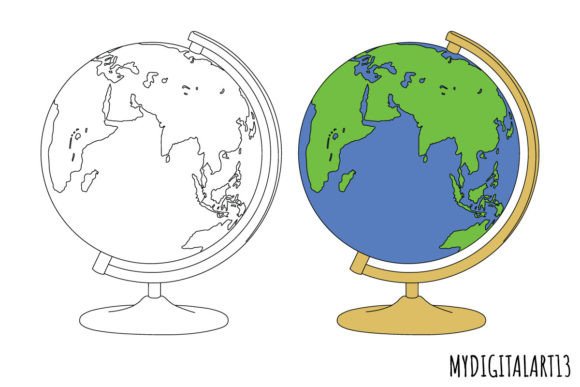
Each set delivers two versions per design: one full-color PNG and one black-and-white PNG—both at 300 DPI resolution and saved with transparent backgrounds. That transparency is non-negotiable in practice. Unlike older clipart libraries where white borders forced manual masking or layer adjustments, these images drop cleanly into Canva, Adobe Illustrator, Affinity Designer, Google Slides, or even Microsoft Word without clipping, resizing guesswork, or background cleanup. The absence of extraneous pixels means less time troubleshooting layout issues and more time refining messaging, typography, or user experience.
The 300 DPI specification isn’t just marketing language—it reflects real-world use cases. When you’re printing classroom posters, custom stickers, invitation suites, or stationery on premium paper stock, resolution directly affects perceived quality. At smaller sizes (e.g., 1.5” x 1.5” die-cut stickers), the crispness holds. At larger formats (e.g., 24” x 36” bulletin board displays), edges remain smooth and detail legible—not pixelated or muddy. This reliability reduces the need to source alternate assets depending on output size or medium.
Strengths in Context: Where These Assets Deliver Consistent Value
Globe Clipart and Back to School Clipart excel where flexibility and scalability intersect. Consider a small tutoring business launching a fall enrollment campaign: they might use the globe icon on a social media graphic, layer it behind bold headline text in a printable flyer, then repurpose the same file as a watermark on PDF worksheets—all without reformatting. Educators building digital learning modules can embed the black-and-white version into interactive PDFs or LMS platforms where color printing isn’t guaranteed, preserving visual hierarchy without sacrificing clarity.
For scrapbookers and crafters, the transparent background eliminates the “halo effect” common with JPEG imports—no more visible edges around icons when layered over textured paper or watercolor scans. Sticker designers benefit from clean cut lines; web developers appreciate predictable sizing when embedding via CSS background-image or inline SVG alternatives (since PNGs retain sharpness at common viewport scales). Even marketers producing seasonal email campaigns find value: the back-to-school variants integrate seamlessly into themed banners, subject-line graphics, or segmented landing pages without needing custom illustration each time.
Realistic Use Cases Across Professional Roles
- Educators: Creating editable lesson plan templates, classroom reward charts, or bilingual welcome signs—especially useful when adapting materials for diverse learners who benefit from visual cues alongside text.
- Small Business Owners: Designing branded back-to-school bundles (e.g., tutoring packages, supply kits) or global-themed service offerings (language schools, international camps, cultural exchange programs).
- Content Creators & Bloggers: Illustrating listicles (“5 Ways to Prepare for Global Citizenship”), infographics on education trends, or Pinterest-optimized printables like study planners or habit trackers.
- Stationery Designers: Building cohesive suites—note cards, thank-you tags, envelope liners—with consistent iconography that supports brand voice without overwhelming typography.
- Freelance Designers: Maintaining a lean, reusable asset library for client projects ranging from school newsletters to NGO annual reports—reducing time spent sourcing or redrawing basic symbols.
Quality, Consistency, and Long-Term Utility
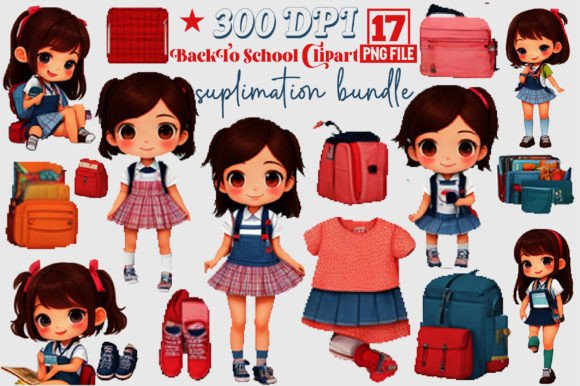
These aren’t hand-drawn illustrations meant for expressive storytelling—they’re functional design elements built for repetition and reuse. Line weights are uniform, proportions balanced, and stylistic choices restrained (e.g., no excessive gradients or shadows that limit adaptability). That restraint increases longevity: a globe icon from this set won’t look dated next year because it avoids faddish effects. Similarly, the back-to-school imagery focuses on universal, inclusive motifs—notebooks, pencils, globes, graduation caps—rather than culturally narrow or age-specific references.
Consistency extends beyond individual files. Because all images share the same resolution, transparency handling, and naming convention (e.g., “globe-color.png”, “back-to-school-bw.png”), they behave predictably in automated workflows—whether syncing to cloud folders, importing into design systems, or batch-processing via scripting tools. That predictability reduces friction during collaborative projects or when handing off files to printers or developers.
Potential Limitations to Acknowledge
These assets aren’t substitutes for custom illustration. If your project requires narrative depth, character-driven scenes, or brand-specific iconography (e.g., a unique mascot holding a globe), these clipart sets won’t fulfill that need. They also don’t include vector formats (like EPS or SVG), so users needing infinite scalability for large-format signage or embroidery digitizing may need supplemental resources. And while the black-and-white versions are clean and legible, they’re not optimized for true monochrome printing—meaning fine details may soften slightly on low-resolution thermal printers or dot-matrix devices.
Additionally, the collection’s strength lies in its focused scope—not breadth. You won’t find 50 variations of a pencil or 20 globe angles. Instead, you get a curated selection: one well-proportioned globe, one clear back-to-school composition, each serving as reliable foundational elements rather than exhaustive libraries. That focus is intentional—and advantageous—for users prioritizing speed and coherence over variety.
Who Benefits Most—and When to Reach for These Assets
Globe Clipart and Back to School Clipart suit professionals who value precision over polish, efficiency over experimentation. If you regularly produce classroom materials, educational products, multicultural outreach assets, or seasonal marketing collateral—and need icons that integrate cleanly, scale reliably, and require zero prep—you’ll likely use these repeatedly. They’re especially valuable during peak planning windows: late summer for academic calendars, early January for global citizenship units, or mid-year for international program launches.
They’re less suited for high-end branding projects demanding bespoke visuals, or for developers building complex, interactive UI components where scalable vectors or icon fonts offer greater control. But for the vast middle ground—where clarity, compatibility, and consistency matter more than artistic distinction—these clipart sets deliver measurable time savings and reduced technical risk. In practical terms, that translates to faster turnaround, fewer revision rounds, and more bandwidth to focus on strategy, pedagogy, or audience engagement instead of pixel alignment.